
Oval Engagement Ring Buying Guide: Best Styles, Settings & Price Guide
Buying an engagement ring is a big step, and for most people, it’s not something they do often. Because of that, it’s normal to feel unsure in the beginning. There are many diamond shapes, styles, and price options to compare.
However, one shape that has become very popular in recent years is the oval engagement ring. At Cheriva Jewels, we’ve seen a clear shift toward oval rings because they offer a balanced mix of size appearance, design flexibility, and pricing.
In simple terms, an oval diamond gives you a slightly larger look compared to other shapes of the same weight. Additionally, it works well with both simple and detailed designs, which makes it a practical choice for many buyers.
This guide will walk you through everything step by step — so you can make a confident and informed decision.
What is an Oval Engagement Ring?
An oval engagement ring features a diamond that has an oval shape. It is closely related to the round cut, but slightly stretched to create a longer form.
Because of this shape, the diamond spreads more across the surface. As a result, it often looks bigger than a round diamond of the same carat weight.
Another advantage is durability. Oval diamonds don’t have sharp corners, so they are less likely to chip during daily use.
At Cheriva Jewels, many buyers choose oval cut diamonds because they offer a good balance between appearance and budget.

Why Choose an Oval Engagement Ring (Pros & Cons)
Before buying, it’s important to understand both the good and the not-so-good points.
Oval Engagement Rings

Popular Oval Engagement Ring Styles
Types of Oval Engagement Rings
When browsing, you’ll find that most designs fall into a few common styles. Each brings a unique personality to the oval diamond.
1. Oval Solitaire Engagement Ring
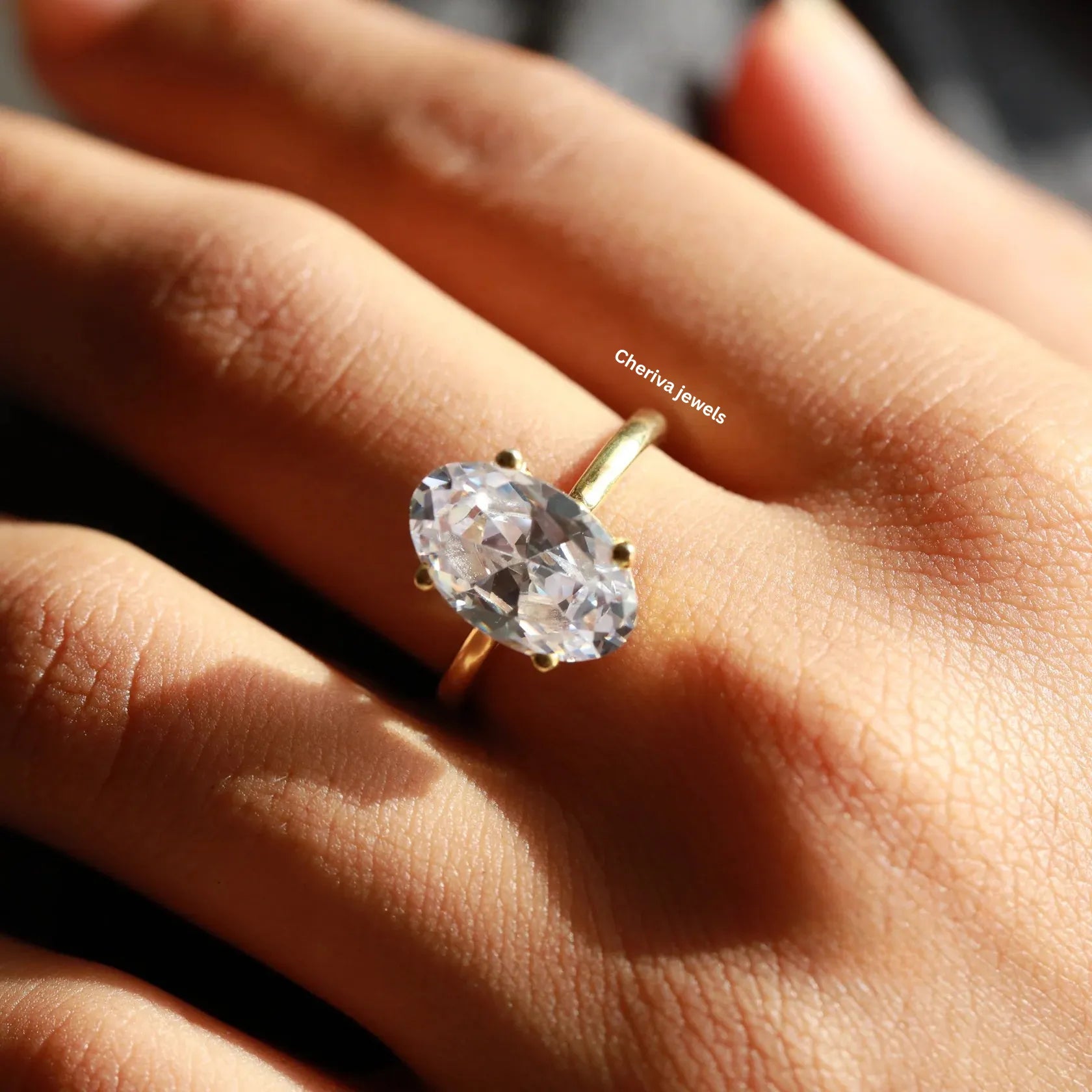
2. Oval Halo Engagement Ring
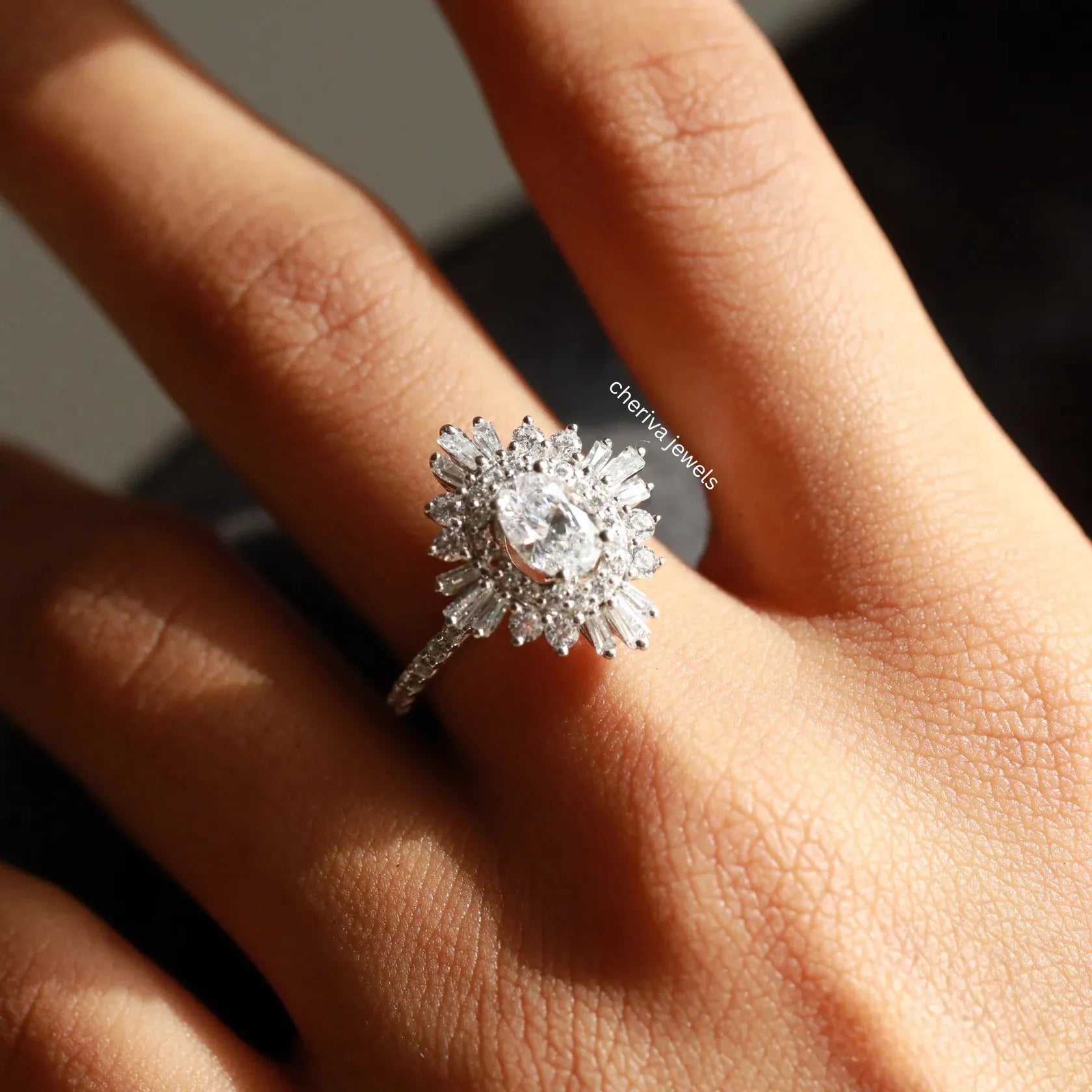
3. Hidden Halo Ring
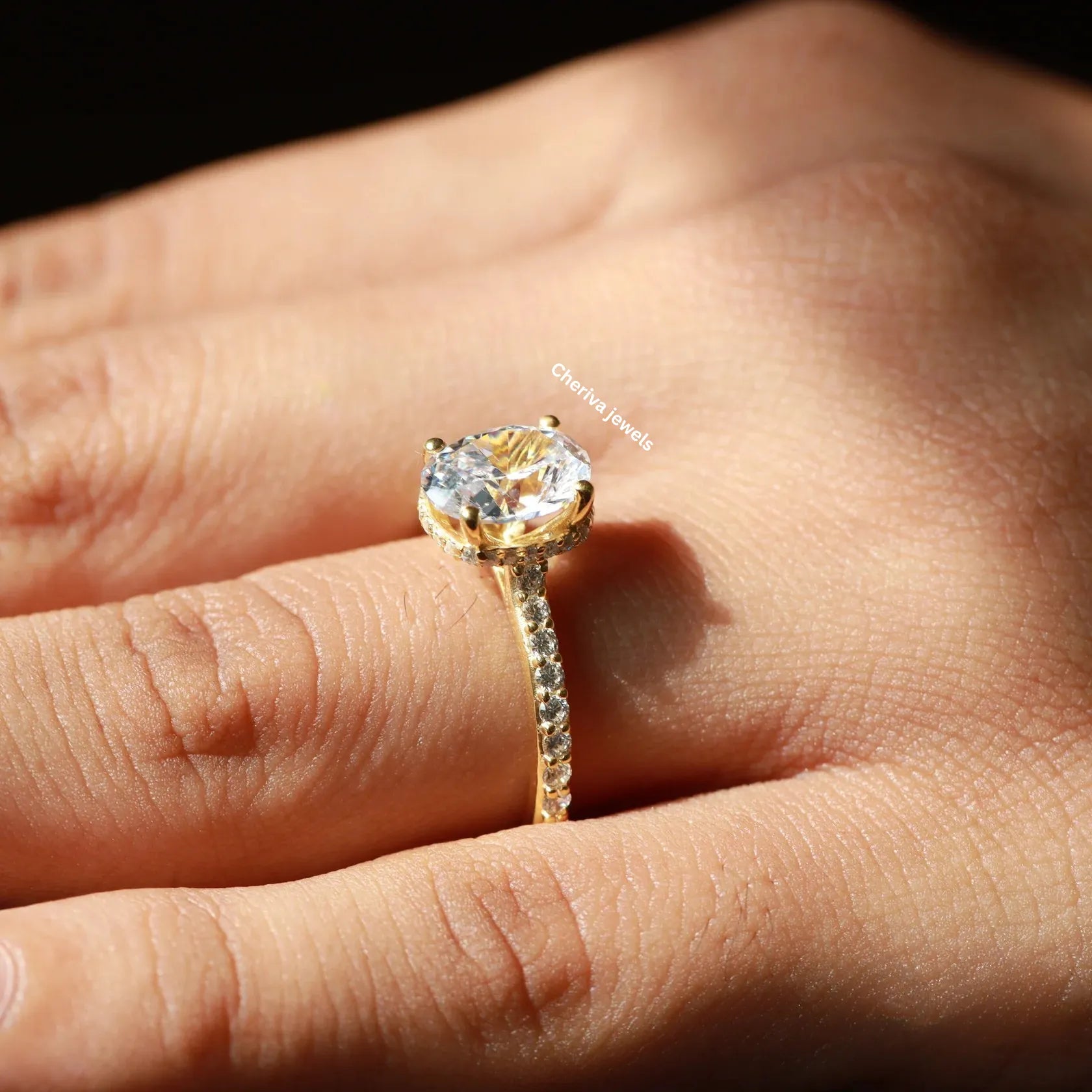
4. Oval Pave Engagement Ring
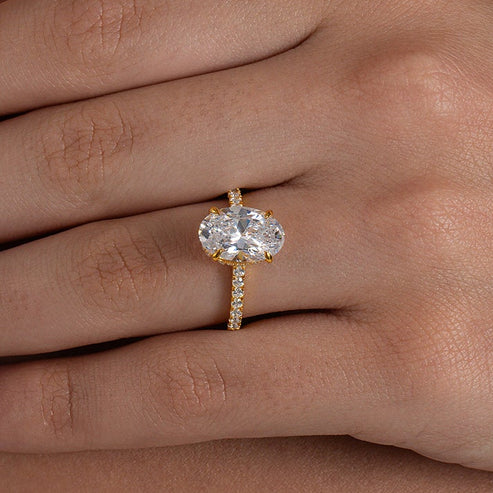
5. Vintage Oval Engagement Ring

6. East West Oval Setting
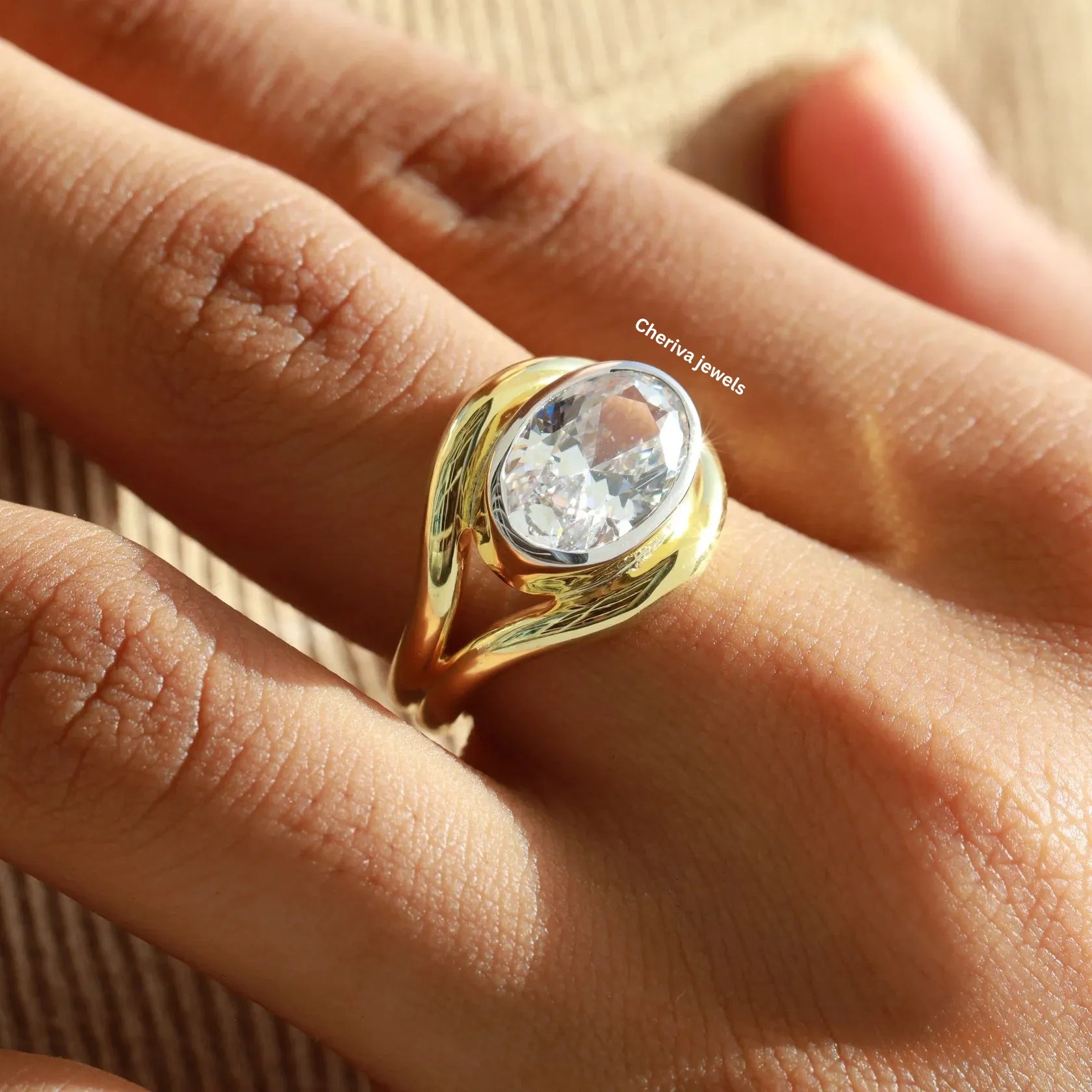
7. Split Shank Setting

Popular Oval Engagement Ring Setting
The setting affects both appearance and safety.
Prong Setting
Most common setting. It holds the diamond with small metal claws and allows more light to enter.
Bezel Setting
The diamond is fully surrounded by metal. This makes it one of the safest options for daily wear.

Cathedral Setting
The band rises upward to support the diamond. It gives a slightly higher and structured look.
East-West Setting
The diamond is placed horizontally.
At Cheriva Jewels, this modern style is becoming more popular among buyers looking for something different.
Oval Engagement Ring Price Guide
Understanding price helps you plan better.
Price Range (U.S. Market)
- $500 – $1,500 → Simple / minimalist rings (small diamonds or alternative stones)
- $1,500 – $5,000 → Most common range (good quality diamond, modest size)
- $5,000 – $10,000 → Larger diamonds, better cut/clarity, premium settings
- $10,000+ → High-end rings with big stones or luxury brands
Lab Grown vs Natural Price Comparison
| Type | Price | Best For |
|---|---|---|
| Lab Grown | Lower | Budget-friendly |
| Natural | Higher | Traditional choice |
At Cheriva Jewels, many buyers now prefer lab grown diamonds because they offer better value for the price.
What Affects Price?
-
Carat weight
-
Color and clarity
-
Diamond type
-
Metal type
-
Certification
Even small differences in these factors can change the final price.
Lab Grown vs Natural Diamond
Lab grown diamonds are made in a controlled environment, but they look the same as natural diamonds.
Natural diamonds are formed over time inside the earth.
If your focus is budget and value, lab grown is a good option. At Cheriva Jewels, we help customers compare both options before choosing.
Understanding the 4Cs for Oval Diamonds
The 4Cs are important when selecting any diamond.

Cut
Oval diamonds don’t have a strict cut grade. So symmetry and brightness should be checked visually.
Color
Oval diamonds can show color slightly more than round ones. Choosing near-colorless grades is a safer option.
Clarity
Since oval shapes hide inclusions well, you don’t always need the highest clarity.
Carat
Carat affects size and price. Oval diamonds often look bigger than their actual weight.
How to Choose the Perfect

Step 1: Set Budget
Decide your price range first.
Step 2: Choose Diamond Type
Lab grown or natural.
Step 3: Pick Style
Simple or detailed.
Step 4: Check Ratio
Ideal ratio: 1.35 – 1.50
- Higher = longer
- Lower = wider
Step 5: Select Setting
Choose something secure for daily wear.
At Cheriva Jewels, we suggest comparing multiple designs before finalizing.
Metal Types for Oval Engagement Rings

-
Yellow Gold → Classic
-
White Gold → Modern
-
Rose Gold → Soft tone
-
Platinum → Strong and durable
Oval Engagement Ring for Different Hand Types
-
Small fingers → oval makes them look longer
-
Long fingers → most styles work
-
Wide fingers → halo designs balance better
Oval Engagement Ring Trends 2026
-
Lab grown diamonds
-
Clean solitaire styles
At Cheriva Jewels, buyers are now choosing simple and practical designs more than heavy styles.
Oval vs Other Shapes
Oval vs Round → Oval looks bigger
| Feature | Oval Diamond | Round Diamond |
|---|---|---|
| Size Look | Appears larger | True to size |
| Price | More affordable | More expensive |
| Shape | Slightly long | Perfect round |
| Style | Modern | Classic |
| Finger Effect | Makes fingers look longer | Balanced look |
Oval vs Cushion → Cushion softer, oval more modern
| Feature | Oval Diamond | Cushion Diamond |
|---|---|---|
| Size Look | Appears larger | Appears smaller |
| Shape | Long | Square/soft edges |
| Style | Modern | Vintage |
| Sparkle | Bright white light | More fire (color flashes) |
| Price | Slightly higher | More budget-friendly |
| Finger Effect | Slim look | Fuller look |
Best Oval Engagement Rings
If you are ready to buy, explore:
-
Oval solitaire engagement ring
-
Lab grown oval diamond ring
Browse the latest collection at Cheriva Jewels and compare options before choosing.
How to Care for an Oval Engagement Ring
Taking care of your ring helps it last longer.
-
Clean regularly using mild soap and water
-
Avoid harsh chemicals
-
Store separately to avoid scratches
-
Get professional cleaning occasionally
At Cheriva Jewels, we recommend basic care to maintain the ring’s condition over time.
Can You Customize an Oval Engagement Ring?
Yes, customization is possible.
You can choose:
-
Diamond size Ratio
-
Setting style
-
Metal type
At Cheriva Jewels, many customers prefer customizing their rings to match their personal style.
Create Your Dream Design
From selecting the perfect diamond ratio to choosing a unique setting style, our experts at Cheriva Jewels help you bring your vision to life.
Customize Your RingMistakes to Avoid
-
Ignoring bow-tie effect
-
Not checking ratio
-
Choosing weak settings
-
Skipping certification
Final Buying Tips
-
Compare multiple options
-
Focus on value
-
Choose certified diamonds
-
Pick practical designs
Conclusion
Choosing an engagement ring becomes easier when you understand what to look for.
An oval engagement ring is a practical choice because it offers better size appearance, flexible designs, and good pricing options.
At Cheriva Jewels, we focus on helping buyers find the right balance between design, comfort, and budget.
In the end, the right ring is the one that fits your needs and feels right for everyday wear.
FAQs
Length-to-width ratio
Bow-tie effect
Certification (GIA or IGI)
Setting quality
Prong setting (most common)
Bezel setting (more secure)
Halo setting (adds size appearance)
The best choice depends on your lifestyle and design preference.
White gold (modern look)
Yellow gold (classic look)
Rose gold (soft tone)
Platinum (strong and durable)
